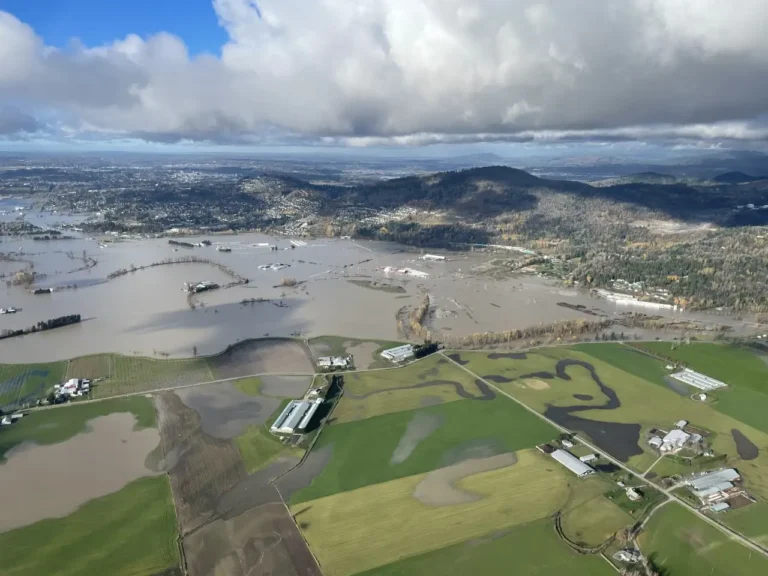
In Abbotsford, memory is not abstract. It sits low on the land, in the wide expanse of Sumas Prairie, where the horizon stretches flat and unforgiving, and where, not long ago, water returned with a force that felt both sudden and inevitable. The 2021 British Columbia floods were, for many residents, a moment of rupture. …
In Abbotsford, memory is not abstract. It sits low on the land, in the wide expanse of Sumas Prairie, where the horizon stretches flat and unforgiving, and where, not long ago, water returned with a force that felt both sudden and inevitable.
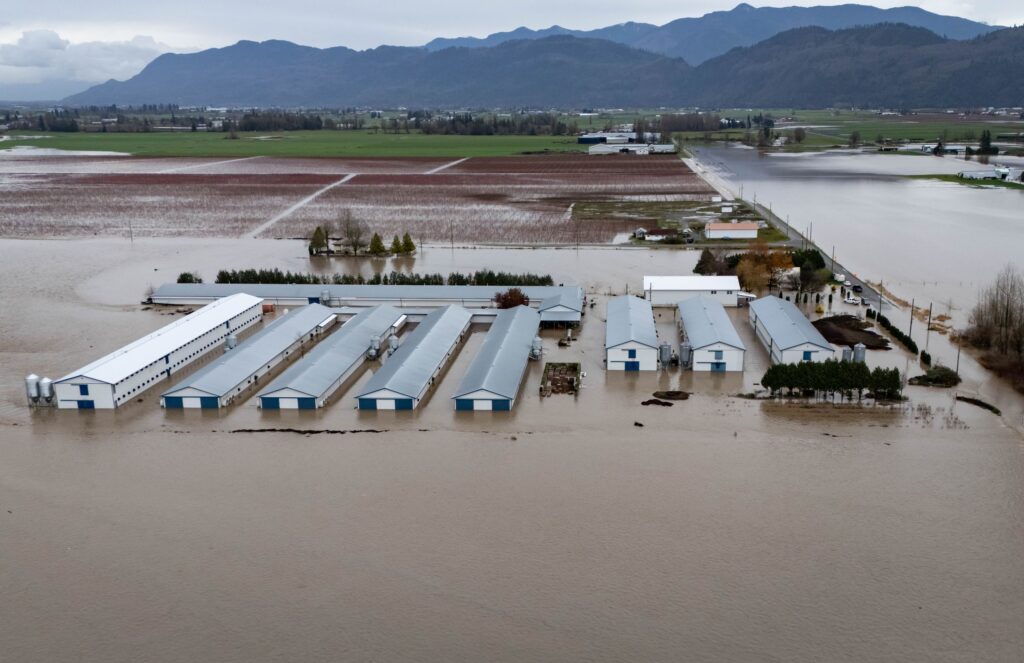
The 2021 British Columbia floods were, for many residents, a moment of rupture. Farms disappeared beneath murky water. Highways became barriers rather than lifelines. Families watched a landscape they had long understood—predictable, even dependable—transform into something uncertain. The scale of the damage was measured not only in dollars, but in trust: trust in infrastructure, in preparedness, in the quiet assumption that someone, somewhere, had accounted for the worst.
Five years later, Abbotsford finds itself asking a deceptively simple question: what has changed?
There is, to be sure, the language of action. Announcements have been made. Plans outlined. Investments discussed in the careful vocabulary of governance—resilience, mitigation, long-term strategy. Pump stations have been evaluated. Dikes assessed. Reports commissioned. The machinery of response has been visible, if not always tangible.
But for those who live and work closest to the land, the calculus is less rhetorical. It is practical. It is seasonal. It is tied to rainfall totals, to river levels, to the quiet calculations that farmers make when deciding whether to plant, to expand, to risk.
Preparedness, in this context, is not a policy goal. It is a condition of survival.
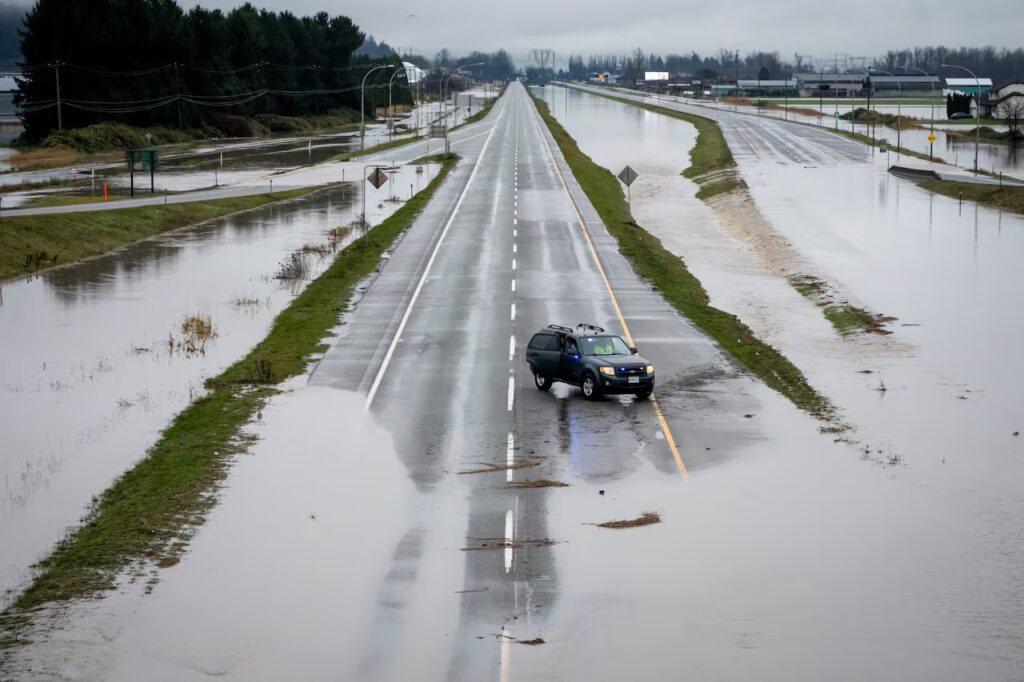
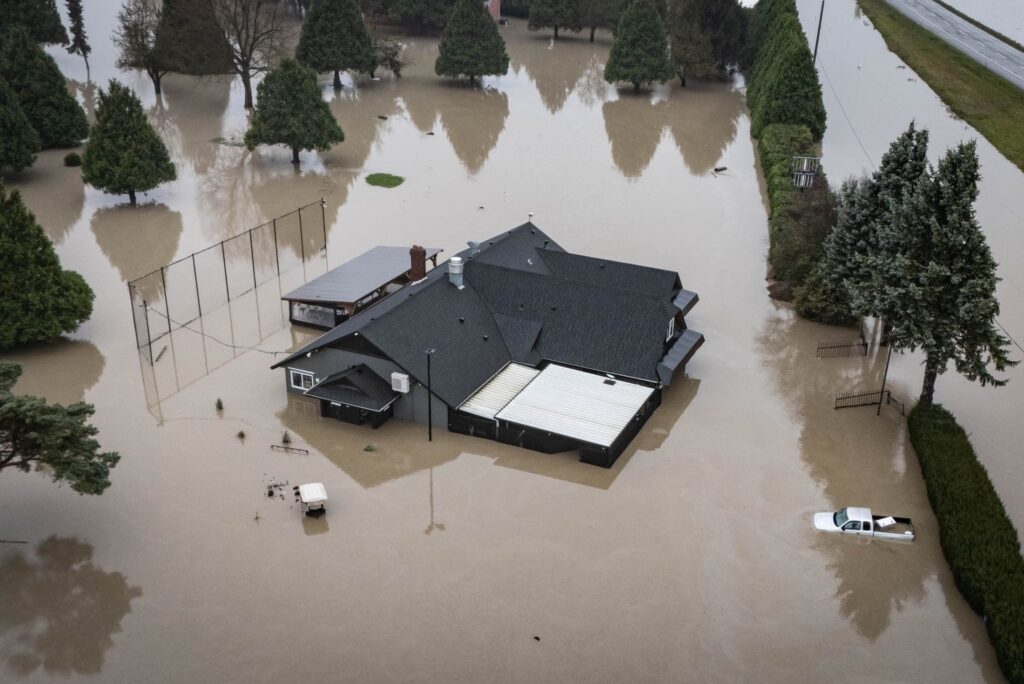
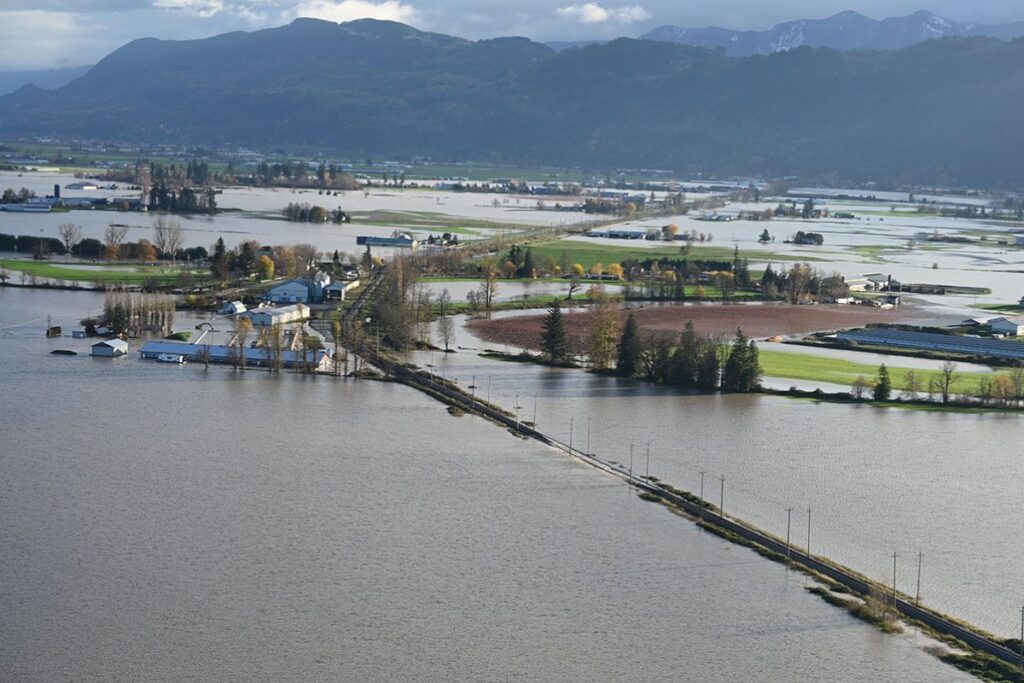
Abbotsford occupies a peculiar position in British Columbia’s civic imagination. It is at once a growing city—pulled into the gravitational orbit of Metro Vancouver’s expansion—and a deeply agricultural community, where the land is not merely scenic, but economic. The tension between those identities has long shaped local politics. Growth brings opportunity. It also brings pressure. And nowhere is that pressure more visible than in the question of how, exactly, the land is protected.
To protect farmland in Abbotsford is not simply to preserve a way of life. It is to safeguard an economic engine that feeds not just the region, but the province. Blueberry fields, dairy operations, poultry farms—these are not relics of a past era. They are active, productive systems, vulnerable to forces that do not negotiate.
Flood mitigation, then, becomes more than infrastructure. It becomes a test of seriousness.
Have the right investments been made, at the right scale, with the right urgency? Are the systems in place today meaningfully stronger than they were in 2021, or merely incrementally improved? Do residents, particularly those in the Sumas Prairie, feel more secure—or simply more aware of what is at stake?
These are not questions that lend themselves to easy answers. They are, however, questions that define leadership.
Municipal politics often turns on visible, immediate concerns—traffic congestion, housing approvals, the pace of development. Flood mitigation operates differently. Its success is measured, paradoxically, in absence: the absence of disaster, the absence of headlines, the absence of crisis. It requires investment before the need is urgent, planning before the consequences are visible. It demands a kind of discipline that is rarely rewarded in the short term.
And yet, it is precisely this kind of long-term thinking that distinguishes management from stewardship.
In Abbotsford, the memory of 2021 has not faded. It has settled into the background, shaping conversations in subtle ways. It surfaces when heavy rain falls for too many days in a row. It appears in discussions about land use, about infrastructure budgets, about what should be prioritized and what can wait.
What cannot wait, many would argue, is clarity.
Clarity on where funding has gone.
Clarity on what protections are now in place.
Clarity on whether the city—and its partners at the provincial and federal levels—have moved from reaction to readiness.
Because the next flood, if it comes, will not arrive as a surprise. It will arrive as a test.
A test of systems, certainly. But also of decisions made in quieter moments, when the urgency had subsided and the political incentives had shifted elsewhere.
Abbotsford learned a hard lesson in 2021. The water made that unavoidable. What remains less clear, even now, is whether that lesson has been fully absorbed—or merely acknowledged.
In the years ahead, as the city continues to grow and evolve, that distinction may prove to be the one that matters most.